

Product News
Product News

November 29, 2023
Disease control programme for wine grapes
UK Grapevine disease management overviewDisease management is a persistent issue in wine grape growing. The three most economically damaging diseases are powdery mildew, downy mildew andbotrytis. At present, disease control relies on conventional chemical fungicides. However, these programmes are expensive, ecologically damaging and are experiencing a rise in resistance to active ingredients.Introducing Fargro's ecological spray programmeBiopesticide use is yet to gain widespread use in the sector – but by using a targeted mix of products, we have delivered a high level of broad-spectrum control whilst also being environmentally sustainable, low-cost and free of the risk of resistance. Accordingly, in terms of commercial appeal, biopesticides align with consumer desires for high-quality wines produced to a high environmental standard.Our programme combines three biopesticides: Taegro, Romeo and SB Plant InvigoratorTaegroBacillus amyloliquefaciens strain FZB24 - Bacteria colonises the plant surface and secretes anti-fungal compounds to inhibit establishment of spores.
Read article

March 29, 2023
Mainspring insecticide
Mainspring is the brand new broad-spectrum insecticide based on the active substance cyantraniliprole, belonging to the chemical group the diamides.
Read article

December 14, 2022
Taegro approved for use in organic systems
CRD/HSE announced by email at the end of November that these arrangements were to close at the end of 2020. What Were the Long Term Arrangements of Use?This was a scheme in which growers could by following a detailed set of rules extrapolate from an on-label use. Edible crops were removed from the scheme some time back leaving only ornamental plant production and a few other non-edible crop uses. The list of excluded active ingredients on which the scheme could operate had been increased at various times with the eventual aim of the UK regulator to phase out the arrangements. Why have they gone?They have gone because the arrangements lacked a clear legal base under the current pesticide regulations. CRD generated Extensions of Authorisation for Minor Use (EAMUs) for a number of uses the industry requested back at the time it was proposed to phase out the arrangements, however, in many cases the products on which requests were made have been lost and in other cases, EAMU requests were unsuccessful or only partially successful with restrictions applied. What does this mean to growers of ornamental plants?Growers may only use pesticides in accordance with label recommendations or where there is an Extension of Authorisation for Minor Use (EAMU). Will this cause any problems for growers?Quite possibly. There are some examples below of affected products. Examples of lost uses from the scheme closure:Systhane 20EWThis product may now only be used on ornamental plant production in accordance with EAMU 2026 of 2020 and use is restricted to container plants under permanent protection. The plant may not be handled for 6 days after treatment. AphoxThis product may only be used on ornamental plant production in accordance with EAMU 4195 of 2019 and 4196 of 2019 and use is restricted to plants grown in containers under permanent protection. ApolloThis product may only be used on ornamental plant production under EAMU 2082 of 2016 which restricts use to outdoors. Pyrethrum 5ECNo uses on ornamental plant production are allowed. SpruzitOrnamental plant production is restricted to permanent protection with full enclosure as per the label. Centurion MaxNo uses in ornamental plant production are allowed. Please be aware that these are only examples and many other products will be affected. This information is only correct at the time of writing. Pesticide approvals and extension of authorisation for minor use (EAMU) change regularly. Any use of any product outside the label is at the grower's own risk. 28/01/2021.Taegro protects ornamental crops by: • Producing metabolites with disease suppressing qualities• Priming the plants disease defence mechanisms• Competing for space and nutrients
Read article

October 01, 2022
New EAMU for Taegro
CRD/HSE announced by email at the end of November that these arrangements were to close at the end of 2020. What Were the Long Term Arrangements of Use?This was a scheme in which growers could by following a detailed set of rules extrapolate from an on-label use. Edible crops were removed from the scheme some time back leaving only ornamental plant production and a few other non-edible crop uses. The list of excluded active ingredients on which the scheme could operate had been increased at various times with the eventual aim of the UK regulator to phase out the arrangements. Why have they gone?They have gone because the arrangements lacked a clear legal base under the current pesticide regulations. CRD generated Extensions of Authorisation for Minor Use (EAMUs) for a number of uses the industry requested back at the time it was proposed to phase out the arrangements, however, in many cases the products on which requests were made have been lost and in other cases, EAMU requests were unsuccessful or only partially successful with restrictions applied. What does this mean to growers of ornamental plants?Growers may only use pesticides in accordance with label recommendations or where there is an Extension of Authorisation for Minor Use (EAMU). Will this cause any problems for growers?Quite possibly. There are some examples below of affected products. Examples of lost uses from the scheme closure:Systhane 20EWThis product may now only be used on ornamental plant production in accordance with EAMU 2026 of 2020 and use is restricted to container plants under permanent protection. The plant may not be handled for 6 days after treatment. AphoxThis product may only be used on ornamental plant production in accordance with EAMU 4195 of 2019 and 4196 of 2019 and use is restricted to plants grown in containers under permanent protection. ApolloThis product may only be used on ornamental plant production under EAMU 2082 of 2016 which restricts use to outdoors. Pyrethrum 5ECNo uses on ornamental plant production are allowed. SpruzitOrnamental plant production is restricted to permanent protection with full enclosure as per the label. Centurion MaxNo uses in ornamental plant production are allowed. Please be aware that these are only examples and many other products will be affected. This information is only correct at the time of writing. Pesticide approvals and extension of authorisation for minor use (EAMU) change regularly. Any use of any product outside the label is at the grower's own risk. 28/01/2021.Taegro protects ornamental crops by: • Producing metabolites with disease suppressing qualities• Priming the plants disease defence mechanisms• Competing for space and nutrients Taegro has a benign environmental profile, is harmless to beneficial insects and pollinators, offers a low risk of developing resistance and is fit for organic programmes.Dr. Joshua Burnstone, Fargro Technical Director, says, “We are delighted to add another highly-effective and innovative plant protection tool to the ornamental growers’ toolkit. Taegro will help growers to address the challenges of foliar diseases while optimising yields and improving quality. It’s easy to handle, can be stored at room temperature and can be applied at any growth stage.” Daniel Lightfoot, Syngenta’s Commercial Head for Europe North West adds “We have a great relationship with Fargro and we are delighted our partnership with them has enabled us to develop the product successfully to support the Ornamentals sector. Fargro’s expert knowledge and experience of how Taegro works will help growers protect crops against foliar diseases will allow them to seamlessly integrate Taegro into their crop protection programme”.EAMU number: 20222404For the control of: alternaria (Alternaria brassicaicola), botrytis (Botrytis cinerea), downy mildew (Plasmopara obducens), powdery mildew, sclerotinia (Sclerotinia sclerotium)MAPP number 19204. Use plant protection products safely. Always read the label and product information before use. Further detail on warning symbols and phrases is included on the labels and leaflets.Neither the efficacy nor the phytotoxicity of the product for which this Extension of authorisation has been granted has been assessed and, as such, the user bears the risk in respect of failures concerning its efficacy and phytotoxicity.
Read article

September 10, 2021
Romeo: 2021 EAMU's
Romeo approved for use on crops of bush fruit, raspberry, strawberry, baby leaf crops, herbs and in ornamental plant production in a range of environments.
EAMU 20211443 – Baby leaf crops and a range of herbs
EAMU 20211449 – A range of soft, bush and cane fruits.
EAMU 20211455 – Ornamental plant production.
Romeo contains the active ingredient Cerevisane, a purified extract of the yeast, Saccharomyces cerevisiaeStrain LAS117. This active ingredient induces internal preventative plant defence mechanisms against key foliar fungal diseases on a range of crops. Cerevisane mimics a microbial attack activating a signalling cascade. This then induces the salicylic acid and jasmonic acid pathways. Romeo stimulates the production of phytoalexins and strengthens the cell wall and leaf cuticle. Romeo is an innovative and ground-breaking biopesticide that makes an excellent addition to your IPM programme. Romeo helps to manage resistance, increase the time between applications in a spray programme and reduce the build-up of residues in a crop.*Please see our Fargro technical notes for more details on tank-mix compatibilities.Mapp no: 19170. Use plant protection products safely. Always read the label and product information before use. Always read the relevant EAMU authorisation before use.
Read article
May 01, 2021
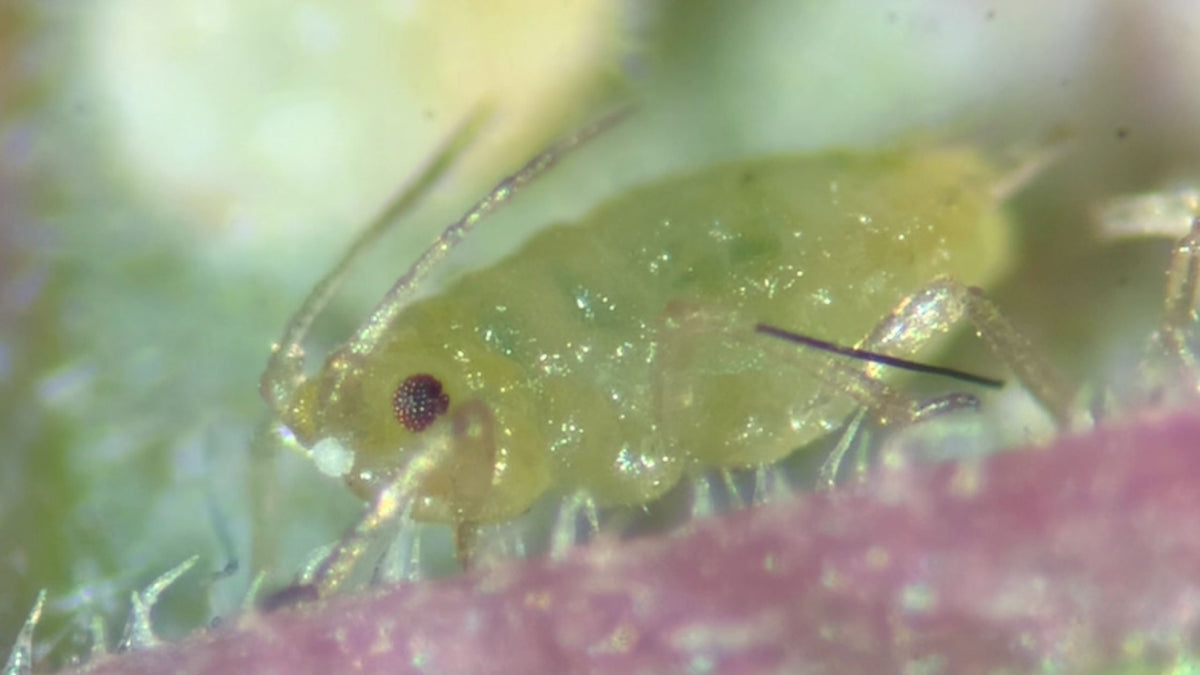
Take back control of your plants from aphids with the tactical use of biologicals
CRD/HSE announced by email at the end of November that these arrangements were to close at the end of 2020. What Were the Long Term Arrangements of Use?This was a scheme in which growers could by following a detailed set of rules extrapolate from an on-label use. Edible crops were removed from the scheme some time back leaving only ornamental plant production and a few other non-edible crop uses. The list of excluded active ingredients on which the scheme could operate had been increased at various times with the eventual aim of the UK regulator to phase out the arrangements. Why have they gone?They have gone because the arrangements lacked a clear legal base under the current pesticide regulations. CRD generated Extensions of Authorisation for Minor Use (EAMUs) for a number of uses the industry requested back at the time it was proposed to phase out the arrangements, however, in many cases the products on which requests were made have been lost and in other cases, EAMU requests were unsuccessful or only partially successful with restrictions applied. What does this mean to growers of ornamental plants?Growers may only use pesticides in accordance with label recommendations or where there is an Extension of Authorisation for Minor Use (EAMU). Will this cause any problems for growers?Quite possibly. There are some examples below of affected products. Examples of lost uses from the scheme closure:Systhane 20EWThis product may now only be used on ornamental plant production in accordance with EAMU 2026 of 2020 and use is restricted to container plants under permanent protection. The plant may not be handled for 6 days after treatment. AphoxThis product may only be used on ornamental plant production in accordance with EAMU 4195 of 2019 and 4196 of 2019 and use is restricted to plants grown in containers under permanent protection. ApolloThis product may only be used on ornamental plant production under EAMU 2082 of 2016 which restricts use to outdoors. Pyrethrum 5ECNo uses on ornamental plant production are allowed. SpruzitOrnamental plant production is restricted to permanent protection with full enclosure as per the label. Centurion MaxNo uses in ornamental plant production are allowed. Please be aware that these are only examples and many other products will be affected. This information is only correct at the time of writing. Pesticide approvals and extension of authorisation for minor use (EAMU) change regularly. Any use of any product outside the label is at the grower's own risk. 28/01/2021.Aphidius waspsAt Fargro we offer a range of Aphidius parasitic wasps which actively searches for aphids by flying towards the scent of honeydew excreted by the host. When a suitable host is located the wasp will inject a single egg into the aphid using its ovipositor. The egg will take over the host turning the aphid into a golden mummy and the new wasp will eat its way out and emerge to then begin searching for further hosts to parasitise.We offer a range of Aphidius species designed to target different aphid species, as different Aphidius species will have preference to select hosts.Aphidoletes aphidimyza This species is a predatory midge and very useful in targeting a range of aphid species including the larger bodied species. The ability to predate a wide variety of aphid species comes from its attack on the aphid, biting at the legs of the aphid and injecting a paralysing toxin and sucking out the contents of the aphid. Application of this predator can be between April and September for re-cycling generations; however, they can be used all year round if supplementary lighting is available.Taegro protects ornamental crops by: • Producing metabolites with disease suppressing qualities• Priming the plants disease defence mechanisms• Competing for space and nutrients Adalia bipunctataA species of ladybird native to the UK. The adult beetle and larvae are both predatory and feed on most types of aphid and is a voracious predator able to be applied within protected environments and outdoors.Chrysoperla carnea Also known as lacewing, this predatory species is a very useful generalist predator effective at controlling established aphid populations, but also feeding on whitefly eggs and scales, thrips larvae, moth eggs, young mealybug nymphs and other small insects. This is a voracious predator with the adults able to fly enabling this species to actively search for pests across a growing area.SB Plant InvigoratorWhen presented by a pest infestation it is important to determine what is required to bring the pest species under control and sometimes the answer is to spray with an insecticide. Integrating a spray alongside biologicals requires a product that will have a short persistence and is not going to harm the biologicals, effectively bringing the pest populations down to manageable levels for the biologicals to move in quickly on the remaining populations.SB Plant Invigorator is a soft soap product, which has a physical mode of action covering and suffocating pests plugged into the crop. Once dried the product is harmless making for an effective product to include within an IPM programme.The SBPI will also breakdown sooty moulds produced as a result of the honeydew excreted by aphids, also possessing a leaf washing effect for control of leaf diseases such as powdery mildew.
Read article

February 05, 2021
A new cutting-edge biofungicide hits the market: T34 Biocontrol
T34 BIOCONTROL is the first CRD approved Trichoderma product to arrive in the UK. It is a broad-spectrum, highly efficient biofungicide that shows great potential for a wide variety of applications.
Read article

February 05, 2021
Taegro: the broad-spectrum biofungicide
Taegro is used for the control of various foliar diseases in a range of protected crops, including all ornamental plant production, aubergines, courgettes, peppers, strawberries and tomatoes.
Read article

February 05, 2021
Anderline Aa (Amblyseius andersoni)
Effective preventative control for spider mites, rust mites, gall mites and young thrips.
Read article

November 11, 2020
Fargro partners with CambridgeHOK to bring best-in-breed solutions
We are pleased to announce our partnership with CambridgeHOK to bring best-in-breed solutions such as climate control, energy and lighting solutions to our customers.
Read article