

Peat-Free News & Updates
Peat-Free News & Updates
June 15, 2023
The latest Growing Media Monitor report details horticulture’s progress to peat-free
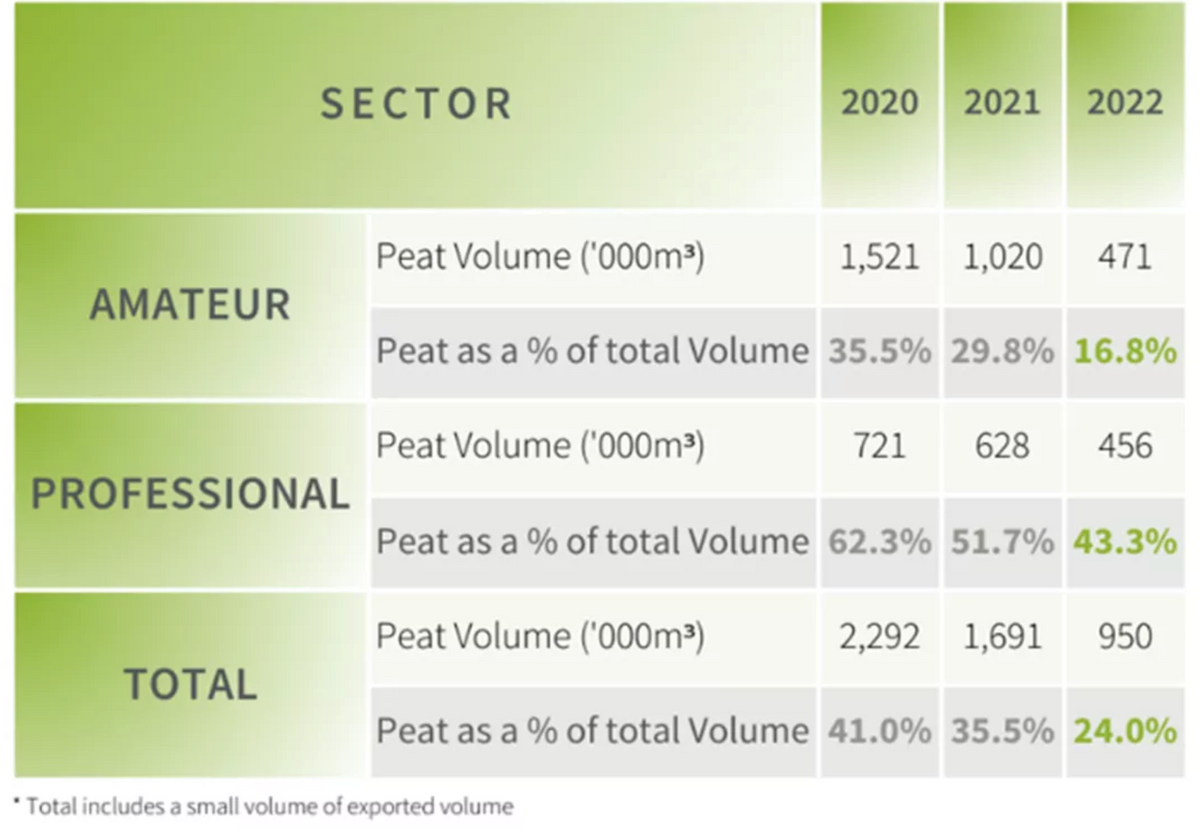
Based on 2022 data, the report, which is developed annually by the Horticultural Trades Association (HTA) and its specialist group, the Growing Media Association (GMA), the Agriculture and Horticulture Development Board (AHDB), and the Department of Environment Food and Rural Affairs (DEFRA), demonstrates a hugely positive shift towards more sustainable practices within the sector.Key findings of the report reveal a significant decline in the proportion of peat used in environmental horticulture. In 2022, peat accounted for only 24% of the total volume of growing media, compared to 36% in 2021. The retail industry has shown remarkable voluntary progress in using less than half the volume of peat compared to the previous year. The percentage now stands at just 16.8% and is rapidly declining. This decrease is attributed to the collaborative efforts of UK suppliers, growers, and retailers in adopting peat-free practices.Retailers have been increasingly specifying peat-free products, while manufacturers have improved their proficiency in producing viable alternatives. For the first time, the proportion of peat used in professional growing media fell below 50% in 2022, reaching 43.3%. Additionally, growing media used to produce nursery stock, pot or bedding plants suggests that roughly 16% of the professional commercial-scale production of trees and plants took place in peat-free products in 2022. The equivalent figure in 2021 was 8%, meaning peat-free production has doubled in the last year. This downward trend in peat usage reflects the industry's commitment to successfully transitioning to a peat-free future by the end of the decade. However, the report also highlights the complexity and difficulty of reducing the remaining 43% in professional use.Wood-based materials, such as wood fibres derived from wood chips, have become the most voluminous ingredient in growing media, accounting for 35.5% of the volume of products supplied to the retail sector. Other alternatives, including bark, coir, and organic materials, have also increased, replacing the peat in the supply chain. However, the figures also indicate some challenges around consistency and vulnerabilities in the supply chain of peat alternatives for UK growing media. The report reflects some of the technical challenges manufacturers face in developing reliably performing mixes for specific types of plants and gardening purposes, such as specialist products for ericaceous plants. Importantly, 85% of finished ornamentals rely on peat to some extent.James Barnes, Chairman of the HTA, expressed support for the industry's progress, stating,"These results show the momentum of our industry in moving away from peat. The use of peat is dropping each year thanks to the dedication and hard work of the sector in working together and sharing knowledge from research and trialling suitable alternatives. But, we need support to get to the finish line in ensuring a successful and sustainable transition to peat-free practices without unintended consequences for horticulture and the environment.“A scenario in which reductions in peat use by UK growers are offset by increased imports of plants produced in peat at lower cost and/or higher yield from overseas growers would effectively be offshoring the UK's peat use and damaging to UK horticulture and the economy. The horticulture and landscaping industry in the UK plays a vital role in the economy, contributing £28.8 billion to the GDP and supporting around 1 in 54 jobs in the UK economy.“While the report showcases substantial progress in reducing peat usage, challenges remain to continue the momentum in removing peat from supply to retail whilst still satisfying consumer demand for gardening. Challenges such as lengthier supply chains for alternatives like coir contribute to increased costs in the supply chain. The industry needs sufficient access to alternative materials and the capacity to process them to meet growing demand. Failure to address these challenges may result in supply shortages and price inflation in the coming years."Environment Minister Trudy Harrison said:“It is great to see that suppliers, growers and retailers are continuing to work together alongside Government to decrease the use of peat across the horticulture sector.“I am strongly encouraged by the steps which the sector is taking to increase the use of peat alternatives, such as bark and bracken and we will continue to provide support to the sector as the industry continues its journey to becoming peat free.”The report underlines the importance of further research and development into peat-free and reduced-peat mixes to ensure a sustainable transition. The horticulture and landscaping industry plays a vital role in the UK economy, and access to high-quality growing media is essential for its success. Achieving a peat-free future is within our grasp, provided the right support, is in place.Read the Growing Media Monitor Report 2022 below.
Read article

June 14, 2023
Fargro launches peat-free hub
We are pleased to announce we have created this digital hub to support the horticultural community in accessing our specialist knowledge on everything you need to know about going peat-free.Find expert answers to all your burning questions, from the range of peat-free growing media available to watering, fertilisers and soil testing. Visit the peat-free hub to browse these topics and to find out more.Visit our peat-free hub
Read article

October 20, 2022
New £1million RHS research project to accelerate horticulture’s transition to peat-free
The Royal Horticultural Society (RHS) has appointed a peat-free postdoctoral fellow to help the horticultural trade transition to sustainable growing media.A £1million, co-funded, five-year project led by the charity will convene government, growers and growing media manufacturers through the Growing Media Association and horticultural product supplier Fargro to research sustainable alternatives to peat in large-scale commercial settings.Five growers initially will work alongside Dr Raghavendra Prasad who has joined the RHS’ 120-strong Science team at RHS Hilltop: Home of Gardening Science this month. They are: Allensmore, Hills Plants, Johnsons of Whixley, The Farplants Group and Vitacress who collectively produce more than 46 million plants every year.Areas of focus for the group will include peat free plant and plug plant production, new growing media technologies to replace the estimated 1.7m m3 of peat used by the UK horticultural industry in 2021, growing protocols, best practice use of the latest products, and developing peat-free solutions for challenging plant groups such as carnivorous and ericaceous species.Findings will also be shared ongoing with the wider industry, including specialist nurseries, as well as the UK’s 30 million home and community gardeners who, armed with a better understanding of sustainable alternatives and best practice advice, can aid the transition to peat-free.The RHS has committed to being entirely peat free by 2025, having banned the sale of peat containing growing media in 2018.Dr Raghavendra Prasad joins the RHS from Poland where he recently completed his PhD at the University of Life Sciences in Poznan. Professor Alistair Griffiths, Director of Science and Collections at the RHS, said:“It’s vital that the RHS works collaboratively with industry and government to research new, peat-free growing media technologies. We know there are already many peat alternatives out there, and even more as yet untapped, so we need to collaborate to develop and share best practice guidance to ensure that peat - which when intact can store carbon for thousands of year - stays in the ground.” Environment Minister Trudy Harrison said: “We are pleased to part-fund this ambitious project which will develop peat-free alternatives to protect nature, and create green jobs. Ahead of our future phase-out of peat, this project will support the Government and society to keep peat healthy and in the ground where it belongs. Healthy peatland will lock up carbon, strengthen our resilience to drought, and serve as a powerful nature-based solution to climate change.”Dr Gracie Barrett, The Farplants Group:“This is a fantastic opportunity for the horticulture industry to work together to address some of the challenges arising as we move forward into peat-free growing. This collaboration brings together a wealth of technical experience and knowledge from across the whole industry. It is also an ideal forum from which to communicate with gardeners and help them achieve the best possible outcomes in their own gardens.”David Walmsley, MD of Vitacress Herbs:“Vitacress Herbs is excited to be partnering with the RHS and other partners from across our industry to accelerate progress towards growing peat-free.“We grow and sell over 16 million pots of culinary and horticulture herbs each year and have made great progress in this area to date. In 2023, all of our horticulture range available in selected garden centres and RHS stores, will be grown peat-free. Through this collaboration, we aim to identify a sustainable growing media which delivers quality plant growth, is safe for food, cost-effective and has a viable long-term supply chain.”Dr Joshua Burnstone, Fargro's Technical Director: "Fargro are delighted to be involved in this research project with the RHS, the government and some of Britain’s top growers and horticultural experts. Our technical specialists have been running peat-free trials with a wide variety of growers for several years and in doing so have gained considerable insight and knowledge on how to successfully grow in peat-free media. We are excited to work as part of this project to deliver significant and meaningful progress towards a more sustainable future for all."
Read article