

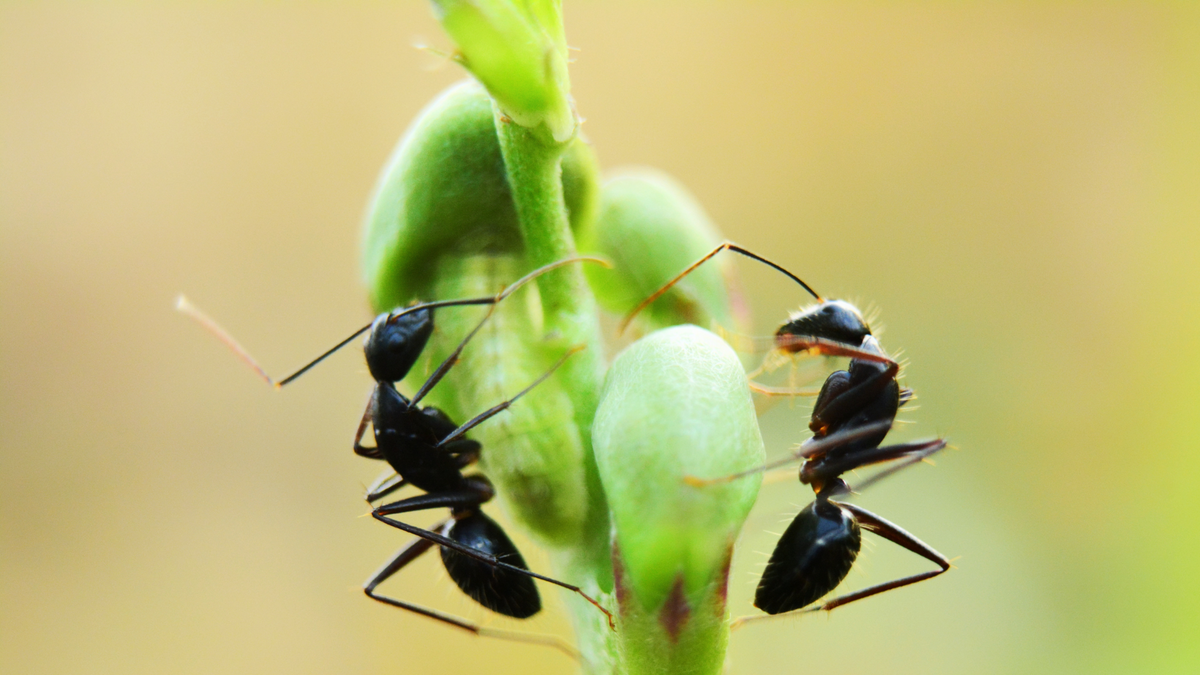
Black Garden Ants
Black Garden ant colonies will remain active for as long as the founder queen remains alive, which could be up to 20 years. However, each year, the colony undertakes an important part of its lifecycle, which is to produce a new generation of reproductive ants. A process that’s coordinated by the queen who, at certain times during the year will lay unfertilised eggs. These soon hatch into larvae that will eventually become adult male ants.
Around the same time, the queen also lays fertilised eggs from which the resulting grubs are fed a richer diet that enables them to become the next generation of queen ants. When the new males and queens have become mature, they’ll have wings, and will wait patiently within their nests for the arrival of a certain set of weather conditions that relates to day length, temperature, humidity, and wind speed.
Once these specific weather conditions have been achieved, they and the reproductive ants from many other nearby nests, crawl out and take to the air where they’ll mate in the sky.
Known as the nuptial flight, vast numbers of the flying ants will be eaten by hungry predators, but those that survive will return to the ground where the males soon die, whilst the now mated queens remove their wings and wander off to find somewhere suitable to start a new ant colony of their own.
Ant habitats
Although there are over 50 species of ant in Britain, the most commonly seen is the Black Garden Ant (Lasius niger), often found as a colony under paving slabs or around the edges of a lawn in our gardens, within a nest that’s governed by an egg-laying queen ant.
What do ants eat?
Black ants particularly favour sugary substances and hence they are often found on garden plants collecting and consuming honeydew from aphids (the excess sugars that sap-feeding insects excrete).
However, the ants also need protein, which they acquire by eating small flies and other small invertebrates.
Can ants cause harm?Unlike red ants, the Black ants don’t sting, but they do fiercely defend their nests by biting and secreting formic acid when they’re under attack,
Should you remove ants from the garden?
However, if the colony isn’t accessible, then pungent smelling plants or certain essential oils placed near to the nest have been shown to have a similar effect.


About Dr. Ian Bedford
Ian has been fascinated by the bug world for as long as he can remember. From studying butterflies on the South Downs as a youngster, he went on to pursue a career in Research Entomology and ran the Entomology Dept at the John Innes Centre in Norwich up until his recent retirement.